


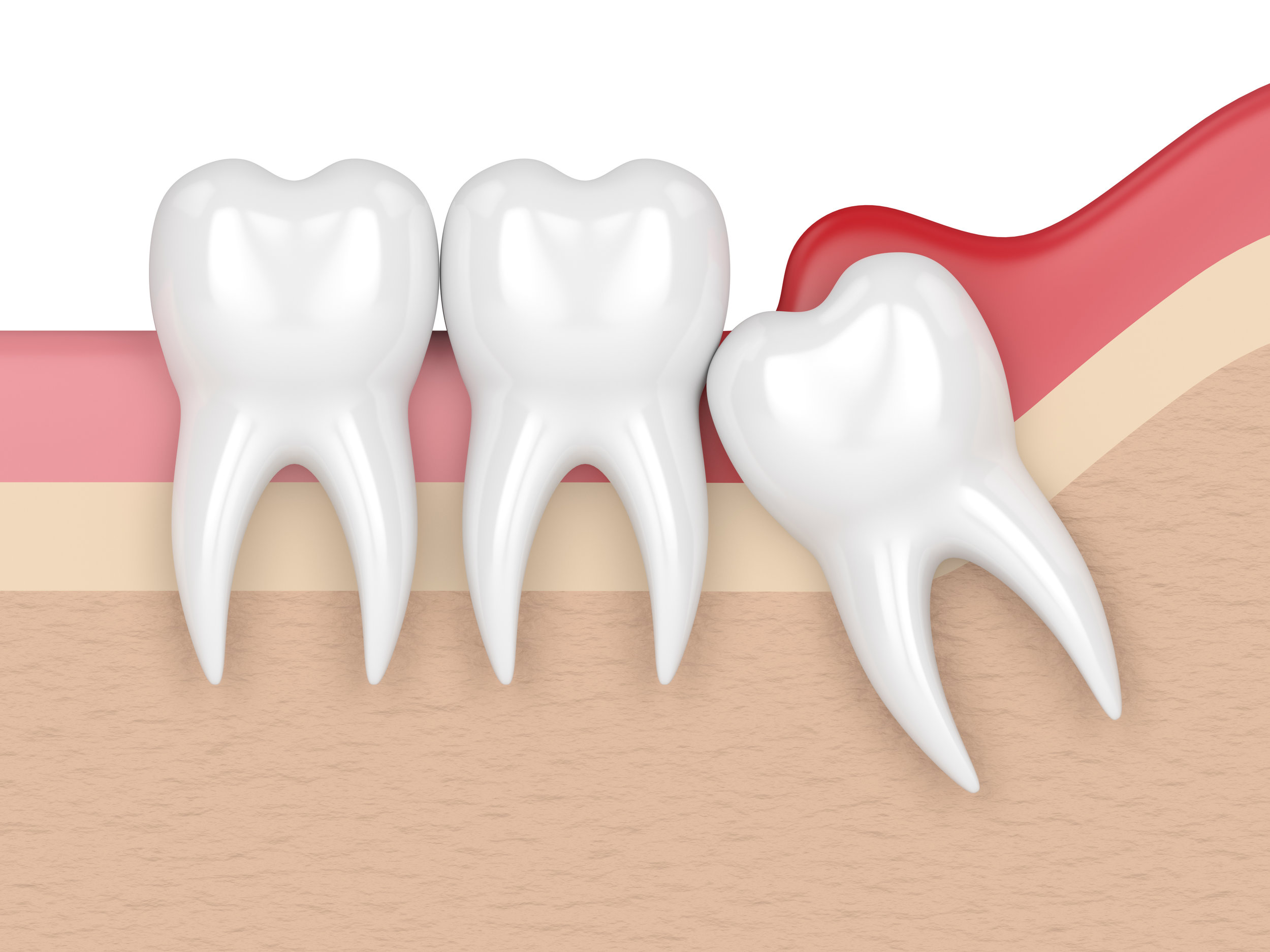
The wisdom teeth are the last teeth to erupt in the mouth. These teeth are the 3rd molars at the very back of the mouth. These teeth that cannot erupt in a healthy way can cause pain, abscesses and discomfort in many people because they do not adapt to the jaw structure in general. In addition, they can remain in the mouth as semi-impacted or impacted, and can cause many adverse conditions in other teeth and in the mouth due to insufficient space in the mouth. However, if the jaw structure of the person is suitable, if there is enough space for the wisdom teeth to erupt at the back of the molars, these teeth can also erupt fully. These fully erupted teeth do not cause any problems. In general, however, there is not enough space in the mouth for wisdom teeth to erupt comfortably.
The most common symptoms of wisdom teeth eruption or impacted wisdom teeth are; pain in the gums and teeth, tooth sensitivity, pain in the jaw, swelling of the lymph nodes, bad breath and the list goes on. For the detection of wisdom teeth, dental x-rays are taken after oral and dental examination. Thanks to this X-ray, the roots of all teeth are clearly visualized, as well as the existing bone structures, angles and impacted teeth.
Wisdom teeth that are not in the correct position should be removed. In wisdom tooth surgeries, local anesthesia is applied to the relevant area. If the bone around the tooth is deemed appropriate, it is removed and the tooth is extracted. After the tooth is extracted, the area is sutured. These stitches are removed between 7 and 10 days. If deemed necessary, the dentist may prescribe antibiotics and painkillers after the operation.
For all your complaints about oral and dental health, you can contact us via our Whatsapp line.
You can access our other articles from the menu on the right.


